|
 |
|
Home |
Consulting |
Training |
Expert Witness |
Failure Analysis |
Design Review |
Corrosion Test |
Corrosion Software |
Protective Coatings |
Materials Selection |
Cathodic Protection |
>>> |
|
Protective Coatings:
Inspection, Maintenance and Repair |
|
Course Outline | Who Should Attend | Registration | In-House | On-Demand | Online Courses | PPT Slides+Testbank | Course List
|
Why WebCorr
|
|
Course Overview |
|
 This 5-day training course thoroughly and
systematically covers every aspect of coatings application and inspection
techniques, maintenance and repair procedures. Coatings selection,
specifications, applications and relevant industry standards for surface
preparations of various substrates such as steel, galvanized steel,
stainless steel, copper, and aluminum are also discussed in depth. The effect of cathodic protection on the performance of coatings is
also covered in detail.
This coatings short course trains the participants with the knowledge and skills
required for effective coatings inspection, maintenance and
repair of both organic coatings (or paints) and metallic coatings such as
hot-dip galvanizing and metallic spray (or metallization). This 5-day training course thoroughly and
systematically covers every aspect of coatings application and inspection
techniques, maintenance and repair procedures. Coatings selection,
specifications, applications and relevant industry standards for surface
preparations of various substrates such as steel, galvanized steel,
stainless steel, copper, and aluminum are also discussed in depth. The effect of cathodic protection on the performance of coatings is
also covered in detail.
This coatings short course trains the participants with the knowledge and skills
required for effective coatings inspection, maintenance and
repair of both organic coatings (or paints) and metallic coatings such as
hot-dip galvanizing and metallic spray (or metallization).
This coatings inspection course can be taken as in-house
training course, course-on-demand, online course and distance learning course worldwide. It can also be customized to meet the
specific needs of your organization. |
|
|
|
Course Outline |
|
|
-
The Role of a Coating Inspector
1.1 The Basic Requirements of A Coating Inspector
1.2 Types of Coatings Inspectors
1.3 The Roles of Coating Inspectors
1.4 Accountability of A Coating Inspector
1.5 Coatings Inspection Requirements
1.6 Case studies on coatings-related disputes resulting arbitrations
and litigations
-
Corrosion Concepts Relevant to Coatings
2.1 Definition and classification of corrosion
2.2 Various forms of corrosion and its control
2.3 The need for coatings
2.4 Major factors influencing corrosion and the durability of coatings
-
BS & ISO Classification of Corrosive Environments
3.1 British standard (BS) and International standard (ISO)
3.2 The duration of corrosion: Time of wetness (ToW)
3.3 Coatings for protection of corrosion in atmospheres
3.4 Coatings for protection of corrosion in water and soil
3.5 Coatings for corrosion protection: special situations and special
stresses
-
Characteristics of Coatings
4.1 Physical barrier and special functions of coatings
4.2 Essential coating properties
4.3 Inhibitive primers
4.4 Importance of moisture vapor transfer rate (M.V.T.) of various
coatings
4.5 MVT and coating blistering
4.6 Osmosis and osmotic blistering: causes and prevention
4.7 Electroendosmosis: causes and prevention
-
Fundamentals of
Coatings
5.1 ISO standard: definitions of coatings, paints and lining
5.2 Basic components of coatings
5.3 Functions of pigment, binder and solvent in a coating system
5.4 General functions of each coat: primer, intermediate coat and top
coat
Question: Is a single coat better than a
multi-coat at the same dry-film-thickness?
5.5 Mechanisms of protection
5.6 Common coatings and their compositions
-
The Protective Coating System
6.1 ISO standard definition of terms: pot life, shelf life, DFT, NDFT,
VOC, tie coat, stripe coat etc.
6.2 Different types of paint
6.3 ISO paint durability classification
6.4 ISO durability vs guarantee time
6.5 Shop and site application: advantages and disadvantages
-
Corrosion Resistant Organic Coatings
7.1 Protective coatings classification
7.2 Mechanisms of curing
7.3 Natural-air oxidizing coatings
7.4 Synthetic-air oxidizing coatings
7.5 Solvent dry lacquers
7.6 Coreactive coatings
7.7 Emulsion type coatings
7.8 Heat-condensing coatings
7.9 100% solid coatings
-
Corrosion Resistant Zinc Coatings: zinc-rich
coatings vs hot-dip galvanizing
8.1 Zinc and its sacrificial protection to steel substrate
8.2 Organic zinc-rich coatings and its properties
8.3 Inorganic zinc-rich coatings and its properties
8.4 Organic zinc-rich vs. Inorganic zinc-rich coatings
8.5 Hot-dip galvanizing and hot-dip galvanized zinc coatings
8.6 Zinc-rich paint vs. hot-dip galvanizing: When and Where to use them
-
Designing for Coatings
9.1 Basic design criteria for corrosion protection purposes
9.2 Accessibility, Treatment of gaps, Precautions to prevent retention
of deposits and water
9.3 Edges, Welding surface imperfections, Bolted connections, Box
members and hollow components
9.4 Notches, Stiffeners, Prevention of galvanic corrosion, Handling,
transport and erection
-
Effect of Substrate on Coating Life
10.1 The Importance of Surface Cleanliness: "visually clean" vs
"chemically clean"
10.2 The Substrate Effect & Coating Life
10.3 Types of Substrates: Steel, Galvanized steel, Stainless
steel, Aluminium, Wood & Concrete etc.
10.4 Millscale and its effect on a coating's performance
10.5 Surface contaminants: moisture contamination
10.6
Surface contaminants:
water-soluble salts and osmotic blistering
10.7 ISO standard on acceptable chloride levels on sandblasted
surfaces
10.8 Surface contaminants: oil and grease
10.9 Other surface contaminants: fungal/algal growth and efflorescence
-
Importance of
Surface Preparation
11.1 BS, ISO, SIS, NACE and SSPC Standards on Surface Preparation
11.2 Hand Tool Cleaning
11.3 Mechanical or Power Tool Cleaning
11.4 Solvent Cleaning/Degreasing Acid Pickling
11.5 Abrasive Blast Cleaning
11.6 High Pressure Water Jetting
11.7 Flame Cleaning
-
BS, ISO, SIS, NACE, SSPC Standards Relevant to Surface Preparation
12.1 Rust Grades and Preparation Grades
12.2 ISO, Swedish and British Standards on Surface Preparation
12.3 ISO Standard on Localized Surface Preparation of Previously
Painted Steel
12.4 Inspection and Verification of Surface Preparation
12.5 Procedure for the visual assessment of steel substrates
12.6 Water jetting standard and the various flash rust grades
12.7 Interpretation of the various blasting grades: Sa2, Sa2½, Sa3,
PMa, PSa2 & PSa2½.
12.8 ISO surface preparation standard for localized repair
-
Methods of Application
13.1 Brush application
13.2 Roller application
13.3 Conventional air spray
13.4 Airless spray
13.5 Conventional spray vs. Airless spray: advantages and
disadvantages
13.6 Electrostatic spray
13.7 Other methods of application
-
Health and Safety Aspects
14.1 MSDS and Product Data Sheet Review
14.2 Flash point classification
14.3 Fire Hazard and Fire Fighting Measures
14.4 Hazardous ingredients
14.5 General Precautions and First Aid
-
Selection
of Coatings
15.1 Factors influencing coatings selection
15.2 The process of coatings selection
15.3 High chemical resistant coatings
15.4 Moderate chemical resistant coatings
15.5 Low chemical resistant coatings
15.6 High temperature resistant coatings
15.7 Special: zinc-rich coatings
-
Coatings and
Cathodic Protection
16.1 How coatings protect steels from corrosion
16.2 How cathodic protection works
16.3 Coating failures induced by cathodic protection
16.4 Coatings suitable for use with cathodic protection systems
16.5 The economic aspect of specifying coatings with cathodic
protection
16.6 Cathodic protection criteria safe for coatings
16.7 Laboratory and field test methods
-
Coating Failures: Causes and Prevention
17.1 Case studies: Arbitration & Litigation cases arising from coating
failures
17.2 Who pays when a coating fails
17.3 The breakdown of coating failures
17.4 Incorrect coatings specifications
17.5 Application errors
17.6 Change in environment from original design criteria
17.8 Faulty paints
17.9 Common coating failures: causes and prevention
17.10 What the owner, applicator and supplier can do to minimize the
risk of coating failures
-
Coating Repair and Maintenance
18.1 The need for coating maintenance and repair
18.2 The timing of coating repair: WHEN to initiate a repair job
18.3 Inspection to determine the extent of coating failure: ISO, ASTM,
SSPC & European standards
18.4 Standard Methods of Evaluating Degree of Rusting on Painted Steel
Surfaces
18.5 Repair procedure: ISO Standard
18.6 Repair of common coating failures such as delamination,
blistering, pinpoint rusting, chalking, etc.
-
Development of Coatings Specifications
19.1 Development of specifications
19.2 Project specification
19.3 Coatings specification
19.4 Coatings work specification
19.5 Inspection and assessment specification
19.6 How to develop coatings specification for new work
19.7 How to develop coatings specification for maintenance
19.8 Contents of a specification
19.9 Sample specifications for new work, maintenance and inspection
-
Quality Control in Coatings Application
20.1 The needs for quality control in coatings application
20.2 Factors to be considered in quality control
20.3 Variables involved in quality control
20.4 Weather conditions
20.5
Dehumidification
20.6 In-process quality control
-
Coatings Inspection and Testing
21.1 The needs for inspection and testing
21.2 Relevant international standards applicable to coatings
inspection and testing
21.3 The inspection requirements
21.4 Preparation for inspection
21.5 Laboratory and field test methods for surface cleanliness
(water-soluble salts) after sandblasting
21.6 Inspection and measurement of surface profile after sandblasting
21.7 Measurement of Ambient Conditions &
Environmental Test Instruments
21.8 Nondestructive Testing and Inspection
21.9 Nondestructive Testing Instruments
21.10 Use of Inspection Procedures for Both Destructive and
Nondestructive Test Instruments
21.11 Laboratory Instruments and Test Methods
21.12 Measurements of wet film thickness (WFT) and dry film thickness
(DFT)
21.13 Holiday detection
21.14 Single coat vs multicoat
21.15 Inspection Procedures
21.16 Documentation and Logbook
21.17 Inspection Checklist
-
Glossary of Technical Terms in Coatings and Corrosion
-
Course Examination
|
|
Course Outline |Who Should Attend |Registration |In-House |On-Demand |Online Courses |PPT Slides+Testbank |Course List
|
|
Who Should Attend
This Coatings Inspection and Repair Course |
-
Engineers and technologists who are in charge of cathodic protection systems
-
Designers who are interested in cathodic protection technology for corrosion
prevention
-
Technicians and maintenance personnel who deal with installed cathodic
protection systems
-
Facility owners and users who are concerned with corrosion
Successful completion of this corrosion course helps participants
prepare for their NACE certification examinations at the Corrosion
Technician, Corrosion Technologist and Senior Corrosion Technologist
levels.
|
|
Registration
for This Corrosion Course |
|
Click
here to register for this corrosion course online,
or
Click
here to download this corrosion course brochure with
registration form in PDF format.
|
|
In-House Training Corrosion Courses |
|
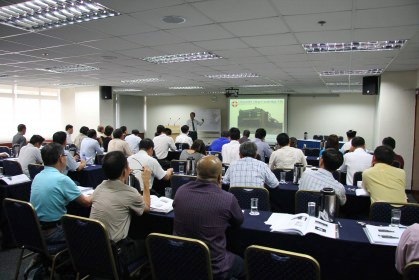 If you are concerned with corrosion in your
company, in-house training or on-site training is a great solution to train a group of
employees from design, production, operation, quality assurance, inspection
and maintenance, and technical sales and support on corrosion control and
corrosion prevention technology. The contents of all our corrosion courses can
be customized to fit your organization's needs. If you are concerned with corrosion in your
company, in-house training or on-site training is a great solution to train a group of
employees from design, production, operation, quality assurance, inspection
and maintenance, and technical sales and support on corrosion control and
corrosion prevention technology. The contents of all our corrosion courses can
be customized to fit your organization's needs.
There is no limit to the number of participants required for
in-house training corrosion courses. We conduct the in-house training
corrosion course at your company's premises worldwide, and at a time convenient to
your company.
Click
here to contact us
for a quotation for in-house training corrosion courses. |
|
Corrosion
Course-On-Demand |
|
 All our publicly scheduled corrosion short courses are conducted once a year. However, you do not need to wait for one year if you have missed any of the publicly scheduled corrosion courses as we have this unique corrosion course-on-demand scheme: we will conduct the course just for you
(on an one-on-one basis) or for a small group from your company at a time and in a location convenient to you. This option costs significantly less than a full-scale in-house
or on-site corrosion training program. All our publicly scheduled corrosion short courses are conducted once a year. However, you do not need to wait for one year if you have missed any of the publicly scheduled corrosion courses as we have this unique corrosion course-on-demand scheme: we will conduct the course just for you
(on an one-on-one basis) or for a small group from your company at a time and in a location convenient to you. This option costs significantly less than a full-scale in-house
or on-site corrosion training program.
Click
here to contact us for a quotation. |
|
Online and Distance Learning Corrosion
Courses |
|
 All
our corrosion short courses are available for online or offline distance
learning. You can start an online corrosion course at any time and learn
at your own comfortable pace and schedule, whenever and wherever you
are. You have around-the-clock access to the interactive and media-rich
course materials, virtual labs, course instructions and course assessments. Discussions and questions related to the corrosion courses
are posted on the website or exchanged through email for a period up to 3 months. Video conferencing or instant messaging can also be arranged for discussions of course topics.
For those who do not have ready access to internet, we can send
you our online course materials on a CD-ROM, or DVD, or USB flash drive for offline
distance learning. All
our corrosion short courses are available for online or offline distance
learning. You can start an online corrosion course at any time and learn
at your own comfortable pace and schedule, whenever and wherever you
are. You have around-the-clock access to the interactive and media-rich
course materials, virtual labs, course instructions and course assessments. Discussions and questions related to the corrosion courses
are posted on the website or exchanged through email for a period up to 3 months. Video conferencing or instant messaging can also be arranged for discussions of course topics.
For those who do not have ready access to internet, we can send
you our online course materials on a CD-ROM, or DVD, or USB flash drive for offline
distance learning.
Click
here to to register an online corrosion short course. |
|
|
|
PowerPoint Slides and Test Banks for Trainers,
Instructors, Tutors, University Lecturers and Professors |
|
If you are involved in teaching or
training, you may wish to purchase a complete set of the trainer's
package for this training course. The trainer's
package comes complete with ready-to-use PowerPoint slides (fully
editable) and test bank (with answer keys). These ready-to-use
PowerPoint slides contain high quality color photographs, illustrations,
animations, audio and video clips. The test bank contains questions
conveniently grouped into four categories: (1) true or false, (2)
multiple choice, (3) calculation, and (4) reasoning and open-ended
discussions. The trainer's package is suitable for in-house training and
university teaching (30 lecture hours). This is exactly the same package that WebCorr uses to deliver our
current training course.
The one-time lump sum fee allows your
organization to use the training package and also modify it. For
example, your organization may modify the course contents and
re-name/re-brand the course under your organization’s name. WebCorr only
retains the copyright of the original PowerPoint slides and test banks.
Click
here to contact us if you need more information on the trainer's package. |
|
Course Outline |Who Should Attend |Registration |In-House |On-Demand |Online Courses |PPT Slides+Testbank |Course List
|
|
Home |
Contact Us |
Copyright
©
1995-2024. All rights reserved. |