|
|
|
• EC • Season Cracking • Caustic Embrittlement • Intergranular • SSC • LME • MIC • SCC • HB-HE-HIC-HMx • Fatigue • Erosion • Fretting • Index |
|
Different Types of
Corrosion
|
|
Environmental Cracking |
|
|
Recognition of Environmental Cracking |
|
|
Historically, "season cracking" was first used to describe the cracking phenomenon of brass cartridges in the presence of ammonia; "caustic embrittlement" was used to describe the cracking of riveted mild steel boiler plates. The two terms were collectively known as "stress corrosion cracking" which was in turn replaced by "environment-sensitive cracking" or "environmental cracking". This broad term reflects the role of environment plays in the cracking process and the terms now covers all the following:
|
|
|
Mechanisms of Environmental Cracking |
|
|
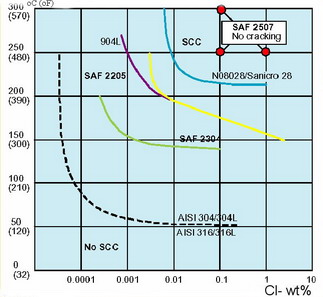
What causes environmental cracking? Environmental cracking results from the conjoint action of three components: For example, copper and its alloys are susceptible to ammonia compounds, mild steels are susceptible to alkalis and stainless steels are susceptible to chlorides.
There is no unified mechanism for environmental cracking in the literature. Various models have been proposed which include the following:
|
|
|
Prevention of Environmental Cracking |
|
|
How to prevent environmental cracking? Environmental cracking can be prevented through:
|
|
|
For more details on Environmental Cracking |
|
|
Where can I learn more about environmental cracking? More details on environmental cracking are included in the following corrosion courses which you can take as in-house training courses, course-on-demand, online courses or distance learning courses:
If you require corrosion expert witness or corrosion consulting service on environmental cracking, our NACE certified Corrosion Specialist is able to help. Contact us for a quote. |
|
|
Home | Subject Index | Contact Us | PDF |
Copyright © 1995-2024. All rights reserved. |