|
| ||
|
Home | Consulting | Training | Expert Witness | Failure Analysis | Design Review | Corrosion Test | Corrosion Software | Protective Coatings | Materials Selection | Cathodic Protection | >>> | ||
|
Corrosion Control and Prevention for Conservators & Curators |
||
|
Course Outline | Who Should Attend | Registration | In-House | On-Demand | Online Courses | PPT Slides+Testbank | Course List | Why WebCorr |
||
| Course Overview | ||
|
This corrosion short course can be taken as in-house training course, online course and distance learning course worldwide. It can also be customized to meet the specific needs of your organization.
|
||
|
||
| Course Outline | ||
|
1 Corrosion & Cultural Heritage
2 Forms of Corrosion:
recognition, mechanisms and prevention
3 The effect of environment on the rate and form of
corrosion
4 Practical session
5 Common corrosion problems associated with gold,
silver, copper,
6 Effects of hot- & cold-working on the corrosion resistance of artefacts
6.1 Introduction to metal casting, brazing and
soldering
7 The nature and protective properties of corrosion products (layers) found on artefacts
7.1 Protective layers
8 Corrosion control and prevention -modification of the local environment
8.1 Use of corrosion inhibitors
9 Corrosion testing and monitoring
9.1 Unit of expression for corrosion rate 9.2.1 Oddy Test 9.2.2 Iodide-Azide Test 9.2.3 Beilstein Test 9.2.4 Phloroglucinol Hydrochloric Acid Test 9.2.5 Chromotropic Acid Test
9.2.6 Iodide-Iodate Test
|
||
|
Course Outline |Who Should Attend |Registration |In-House |On-Demand |Online Courses |PPT Slides+Testbank |Course List |
||
| Who Should Attend | ||
|
Curators, conservators and those working in the preservation of heritage buildings and monuments.
|
||
| Registration for This Corrosion Course | ||
|
|
||
| In-House Training Corrosion Courses | ||
|
If you are concerned with corrosion in your business, in-house training is a great solution to train a group of employees from design, production, operation, quality assurance, inspection and maintenance, and technical sales and support on corrosion control and corrosion prevention technology. The contents of all corrosion courses can be customized to fit your organization's needs.
There is no minimum or maximum number of participants required for in-house training corrosion courses. We conduct the in-house training corrosion course at your company's premises and at a time convenient to your company. Requests for in-house training corrosion courses from overseas countries are also welcome.
Click here to contact us for a quotation.
|
||
| Corrosion Course-On-Demand | ||
|
All our publicly scheduled corrosion short courses are conducted once a year. However, you do not need to wait for one year if you have missed any of the publicly scheduled corrosion courses as we have this unique corrosion course-on-demand scheme: we will conduct the course just for you on an one-on-one basis at a time and in a location convenient to you. This option costs significantly less than a full-scale in-house training program.
Click here to contact us for a quotation for taking this course as course-on-demand.
|
||
| Online and Distance Learning Corrosion Courses | ||
|
Click here to register this corrosion short course for online or distance learning. |
||
| PowerPoint Slides and Test Banks for Trainers, Instructors, Tutors, University Lecturers and Professors | ||
|
If you are involved in teaching or training, you may wish to purchase a complete set of the trainer's package for this training course. The trainer's package comes complete with ready-to-use PowerPoint slides (fully editable) and test bank (with answer keys). These ready-to-use PowerPoint slides contain high quality color photographs, illustrations, animations, audio and video clips. The test bank contains questions conveniently grouped into four categories: (1) true or false, (2) multiple choice, (3) calculation, and (4) reasoning and open-ended discussions. The trainer's package is suitable for in-house training and university teaching. This is exactly the same package that WebCorr uses to deliver our current training course. The one-time lump sum fee allows your organization to use the training package and also modify it. For example, your organization may modify the course contents and re-name/re-brand the course under your organization’s name. WebCorr only retains the copyright of the original PowerPoint slides and test banks.
Click here to contact us if you need more information on the trainer's package. |
||
|
Course Outline |Who Should Attend |Registration |In-House |On-Demand |Online Courses |PPT Slides+Testbank |Course List |
||
|
Copyright © 1995-2024. All rights reserved. |
||

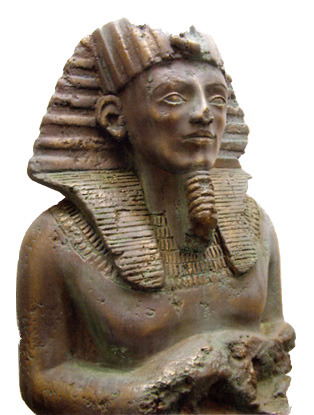 Preserving
the national heritage and cultural assets is a challenge to conservators
and curators worldwide. This corrosion course systematically and thoroughly
covers the basic theory of corrosion and the practice of corrosion
control and prevention for conservators and curators.
Preserving
the national heritage and cultural assets is a challenge to conservators
and curators worldwide. This corrosion course systematically and thoroughly
covers the basic theory of corrosion and the practice of corrosion
control and prevention for conservators and curators.